Press Releases
IRIX Draws Its Desktop on an Emulated SGI Origin
IRIX draws its own graphical login and desktop on an emulated SGI Origin, with an absolute tablet pointer and working sound.
A Headless Emulator Gains a Graphical Login, a Working Desktop, an Absolute Pointer and Sound
THE MACHINE ROOM (September 25, 2026). The Origami project today announced that IRIX 6.5.30 draws its own graphical login screen and desktop on an emulated SGI Origin. Until this month every result this project reported was a serial console. The emulated Origin 200 now carries a graphics card whose unmodified IRIX driver and X server paint a full-colour 1280 by 1024 login screen, and a user can log in, open windows, drag them, minimise and restore them.
The Card
The Origin 200 was sold as a server, and one that needed a screen took a PCI graphics card. The emulated Origin 200 carries a model of one, the PsiTech RAD4, in the PCI slot its vendor documents. IRIX’s own driver for the card attaches, and the display manager’s own X server renders the login screen: correctly shaped, correctly coloured, with the SGI hardware cursor composited into the picture the way the card’s colour converter overlays it on the video signal.
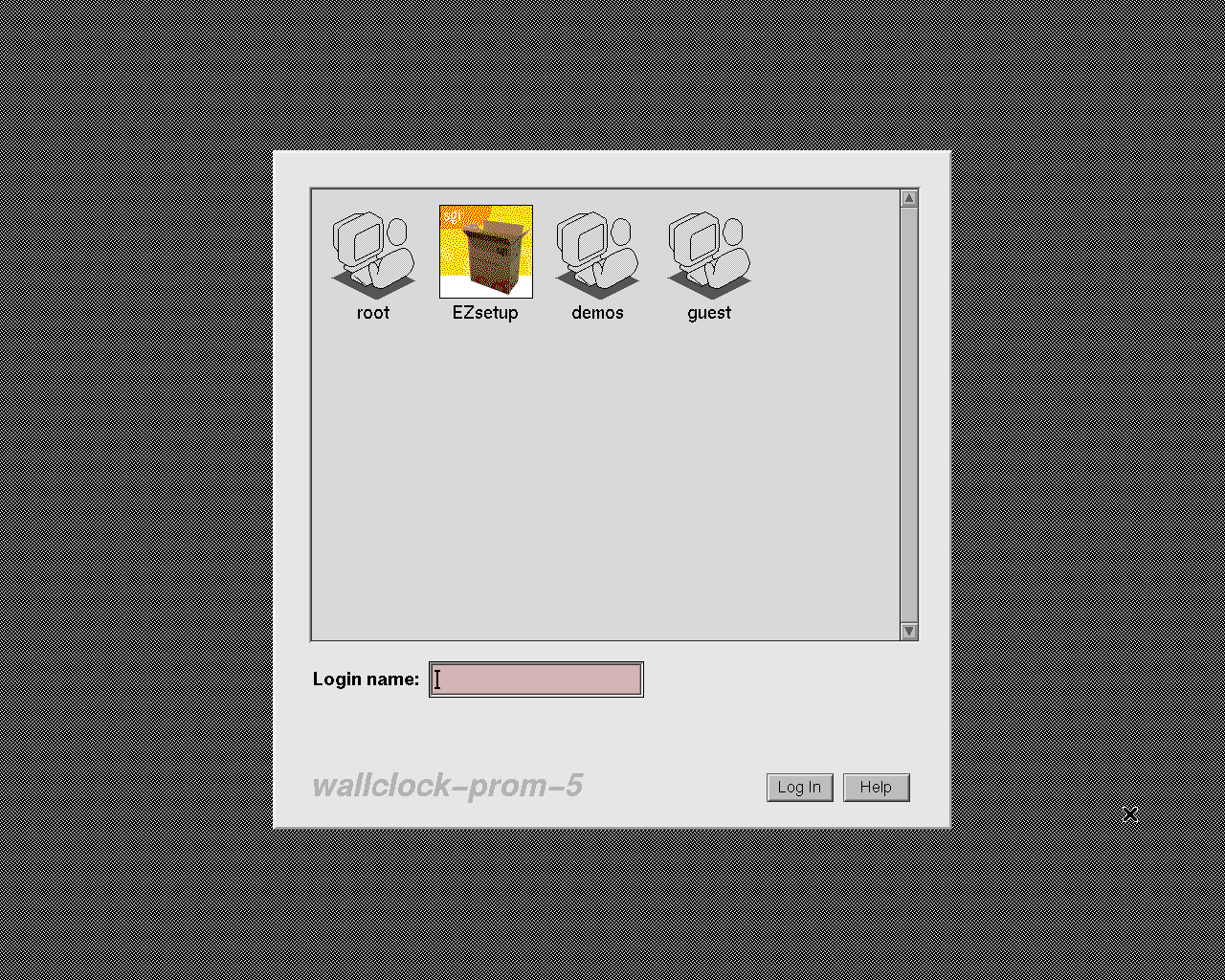
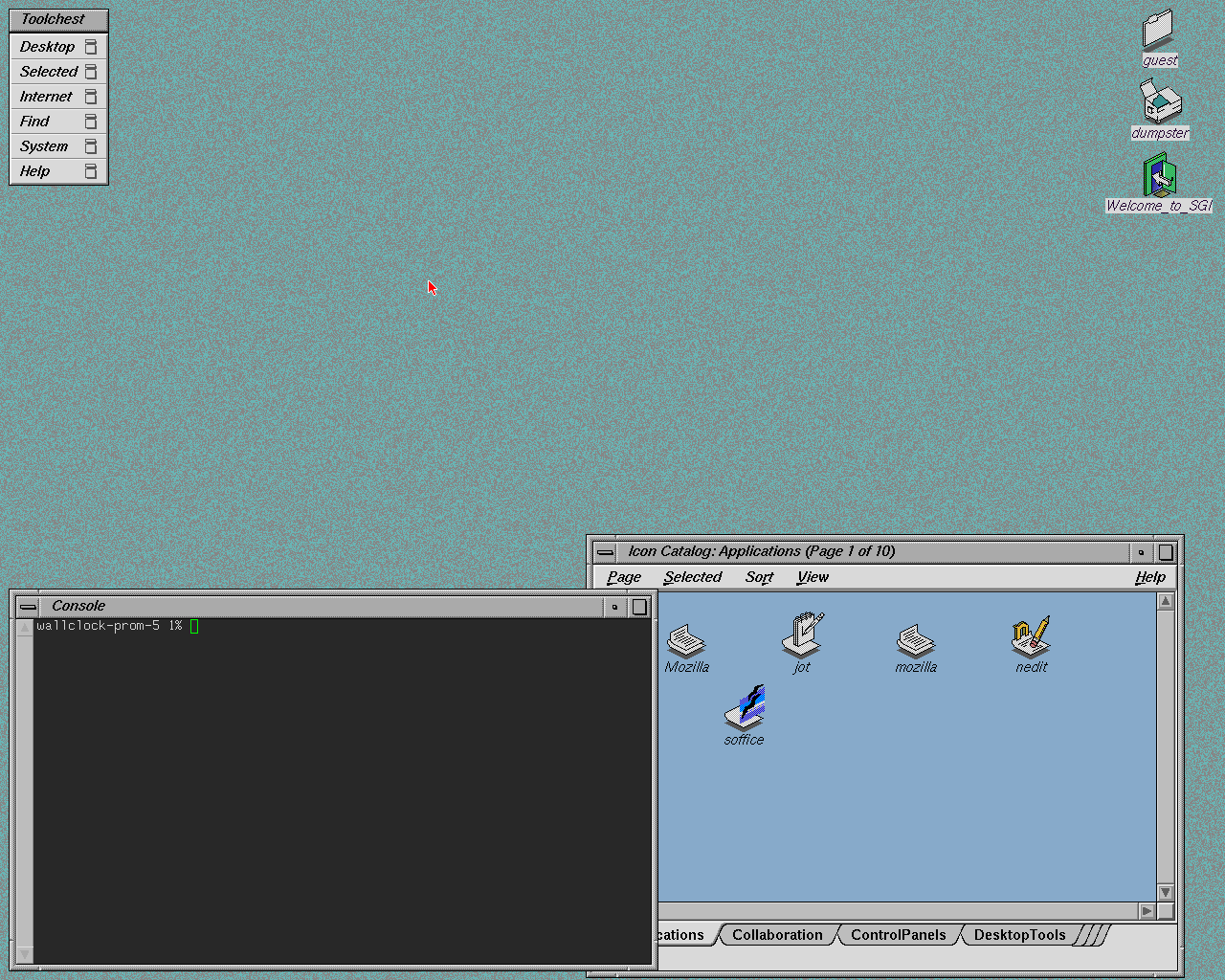
The guest’s keyboard and mouse reach it, and a login reaches the desktop. On that desktop, window drag, minimise and restore, and redraw of overlapping windows all come out pixel-exact against the expected image.
A Pointer That Lands Where You Click
Driving the desktop over a remote viewer exposed a problem that was not a bug. A viewer sends absolute positions, the emulated PS/2 mouse can only send relative movement, and IRIX’s pointer acceleration multiplies large movements, so clicks overshot their targets. A real mouse moves in small steps and never meets this, so there was nothing in the mouse to fix. The faithful answer was a different device: an emulated serial drawing tablet, which IRIX already supports with its own stock driver, reporting absolute coordinates with no acceleration in the path. A plain remote viewer’s double-click on the desktop’s dumpster icon opened its folder window.
SGI’s Own Graphics, Partly
A second graphics head is further back. The emulated Origin 2000 carries a model of SGI’s own Solid Impact board, and IRIX has reached a login, its Console window and the Toolchest on it. The login screen itself still draws its form in the wrong colour and misses fields, some icons lose their colour, and OpenGL has not yet been carried through. It is a first desktop, not a finished one.
And It Makes a Sound
On a one-node Origin 2000 fitted with SGI’s audio I/O board, IRIX’s sfplay plays SGI’s own
confidence tone through the emulated audio processor, and the captured output matches the source
file in pitch and shape. A stereo file with a different tone in each channel comes back bit-exact
with its channels in place, and the digital audio output is sample-exact. Playback runs at the
right speed when the emulator’s clock follows guest execution. On the ordinary host-clocked setting
it still stretches.
About This Project
Origami is a permanent fork of QEMU that emulates SGI’s MIPS/IRIX ccNUMA machines. It exists because nothing else emulated them, and because SGI’s firmware, IRIX and its drivers are the strongest available witness that the model is faithful. A run on it is evidence about the model, never about the silicon. It ships nothing and sells nothing. It is a research and preservation project, unaffiliated with Silicon Graphics or PsiTech.
SGI, IRIX, Origin, Solid Impact and MIPS are trademarks of their respective owners, and this project is unaffiliated with any of them. No SGI code is reproduced in the fork.